
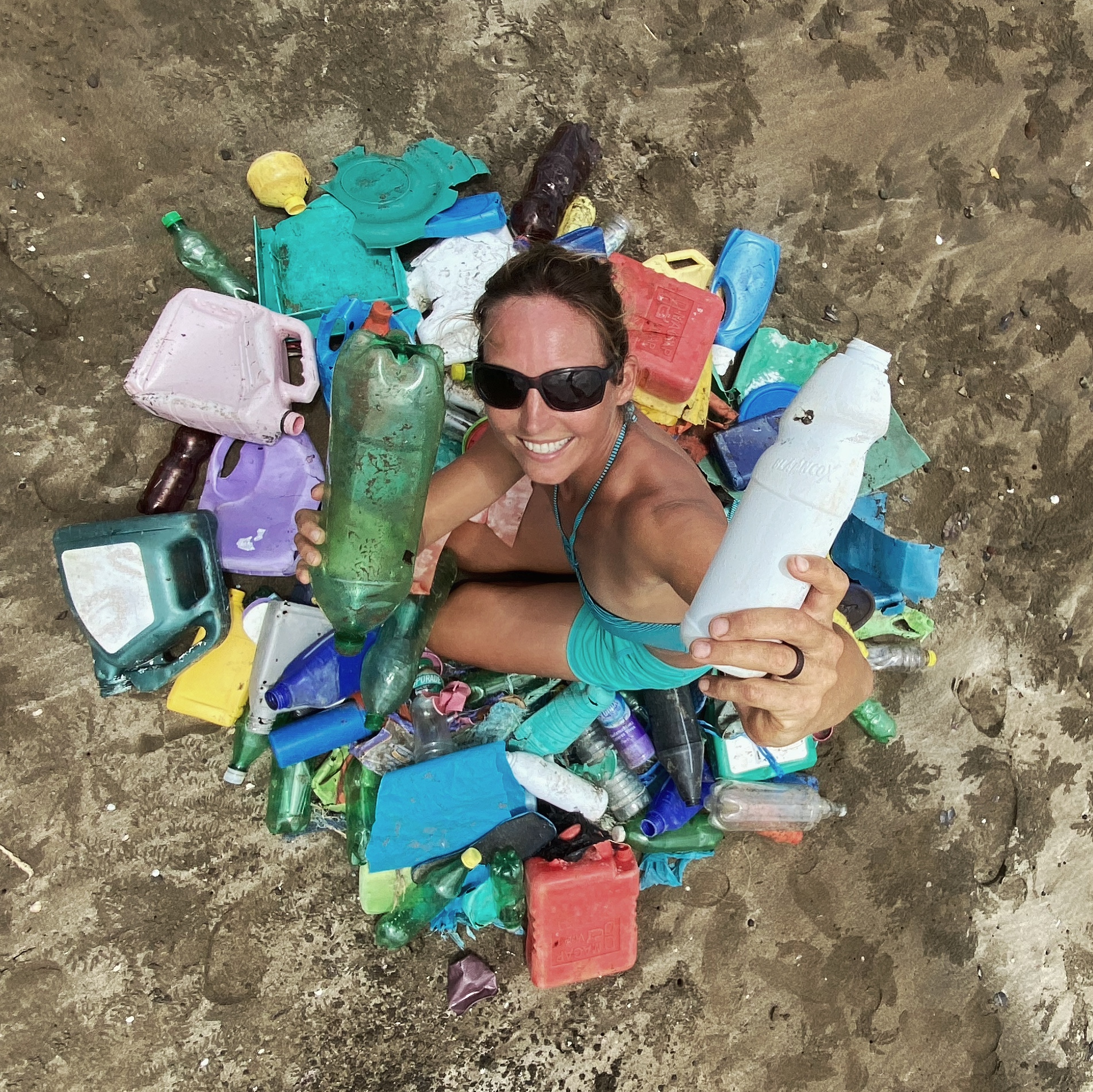
Witnessing the impact of the plastic crisis first-hand
As sailors, we spend much of our time in remote coastal areas — places of incredible beauty, but often without functioning waste management systems. In these places, it becomes especially visible how trash doesn’t disappear once it leaves our hands — not because this only happens here, but because it is no longer hidden from view. It accumulates in nature, is buried in unregulated landfills, or burned in the open.
Over the years, we have seen first-hand how plastic and composite packaging materials end up in the environment, harm marine wildlife, break down into microplastics, or release harmful toxins when handled improperly. These experiences shape how we think about waste — not as something that simply vanishes, but as something that continues to exist somewhere else.
Preventing plastic waste is the most effective way to tackle the crisis
When we first started out with In Mocean, we focused on collecting plastic waste and supporting local communities in giving it a second life — so it doesn’t end up in nature.
But to stop the global plastic crisis, we need to start much earlier. Collection and recycling are important steps, but they address the symptoms, not the source.
When we started collecting trash on remote beaches, we repeatedly found the same items: toothbrushes, shampoo and detergent bottles, single-use cups and cutlery and an overwhelming number of plastic bottles. Seeing these patterns led us to reflect on our own consumption habits and ask where we could reduce our contribution to the problem.
That’s why we created the Trash Navigator Challenge.
STARTING ON ZERO WASTE DAY
30 MARCH 2026
Discover simple shifts for cleaner oceans in just 7 days.
Looking at our own plastic consumption habits
Turning the focus inward was an important step. Instead of only addressing the visible waste in nature, we began to look at what we were throwing away ourselves.
This shift is simple, but powerful. By observing our own waste, we begin to understand where it comes from and where small changes are possible in our daily routines.
Understanding the bigger system behind plastic waste
It’s important to recognize that individuals are not the sole cause of the global plastic crisis. Policy makers, producers, and retailers play a significant role in shaping the systems that determine how products are designed, packaged, and managed after use.
At the same time, in many parts of the world, waste management systems remain limited or ineffective. In places with more advanced infrastructure, waste often disappears from sight, creating the impression that it is being handled sustainably — even when large portions are burned or downcycled.
These dynamics highlight that plastic pollution is a systemic issue that requires changes at multiple levels.
Rethinking assumptions about waste and awareness
While sailing in regions with limited infrastructure, we often hear the assumption that people throw waste into nature due to a lack of awareness. However, the reality is more nuanced.
In many cases, there are simply no viable alternatives. Without collection systems, recycling facilities, or regulated landfills, waste has nowhere else to go.
At the same time, in countries with more developed systems, the consequences of our consumption are often less visible. Waste is removed from our immediate surroundings, which can make it easier to overlook the scale of the problem. But plastic waste never truly disappears. Even when it is burned, the toxins remain — often captured in filters that then become hazardous waste themselves. Recycling can extend the life of materials, but it does not eliminate the underlying issue. Ultimately, it often only postpones the question of what to do with the toxins.
A practical way to reduce plastic waste at home
The most effective packaging is still the one that does not exist. Avoiding plastic packaging wherever possible remains the most direct way to reduce its impact.
Despite these systemic challenges, there are still meaningful actions we can take in our everyday lives.
The Trash Navigator Challenge is designed as a simple starting point.
For 7 days, participants track the plastic and composite materials that end up in their trash. The goal is not to eliminate waste entirely, but to build awareness and identify patterns.
Based on these observations, each participant is encouraged to choose one realistic change. This could be switching from bottled water to refilling, choosing products with less packaging, or avoiding a specific type of single-use plastic.
Even partial changes can have an impact when practiced consistently.
From awareness to collective action
The plastic crisis can feel overwhelming, especially when the responsibility seems to lie far beyond individual control. The intention of this challenge is not to shift responsibility away from systemic actors, but to complement broader change with individual awareness and action.
By observing, reflecting, and sharing insights, we can contribute to a better understanding of consumption patterns and create momentum for change — both individually and collectively.
The challenge starts on Zero Waste Day, 30th of March 2026. Sign up to receive your Trash Diary, follow along for 7 days, and become part of a growing community that is exploring practical ways to reduce plastic waste.
You are not doing this alone
One of the most powerful parts of this challenge is that you are not doing it on your own.
Observing your waste for 7 days is just the beginning. After the tracking phase, we move into a second week focused on sharing practical tips, honest insights, and real-life solutions.
Members of the In Mocean Fleet will share what works for them in their everyday life on board — from small habit shifts to creative ways of avoiding packaging at sea. We will also host an Instagram Live with Sonja Schelbach, who has run two zero waste shops in Hamburg for many years, where you can ask your questions directly.
At the same time, we will openly share where we still struggle ourselves — the areas where it’s hard to avoid plastic, where alternatives are not accessible, or where we are still figuring things out.
Because this is not about getting everything right. It’s about learning together.
We would love for you to be part of that exchange — by sharing your own observations, shifts, tips, and questions.
Use #iaminmocean and #TrashNavigator2026 and tag @inmoceanorg so we can connect, learn from each other, cheer each other on and keep the momentum going beyond the challenge.


